

Winter visitors are returning to our shores, while work continues to support the Island’s breeding birds, plants and other wildlife. Here are the latest species stories and recovery updates.
Sanderling Stories as winter birds return
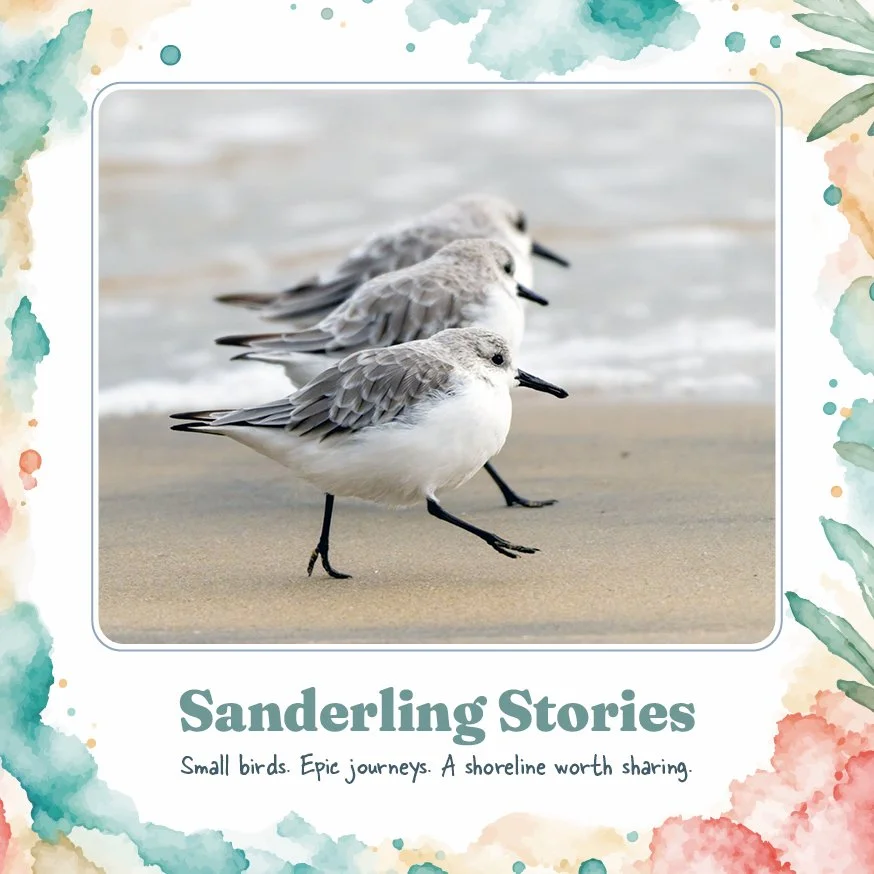
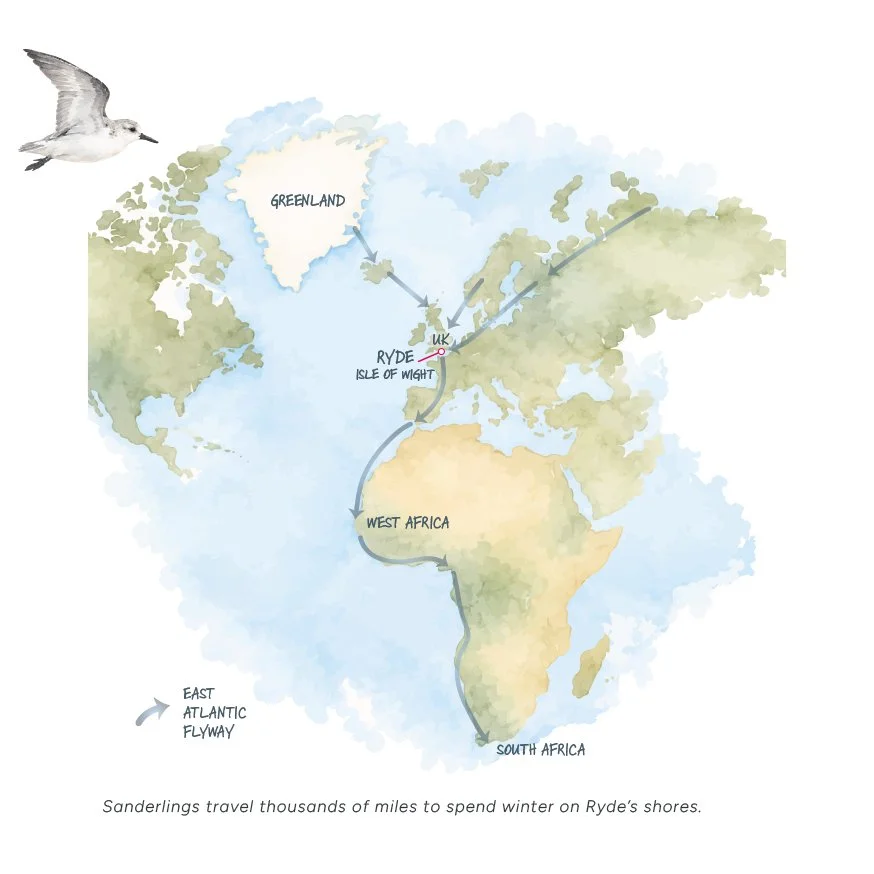
Sanderlings and their shoreline companions are returning to Ryde Sands, where the Sanderling Recovery Project is preparing for another winter of monitoring, public engagement and practical protection.
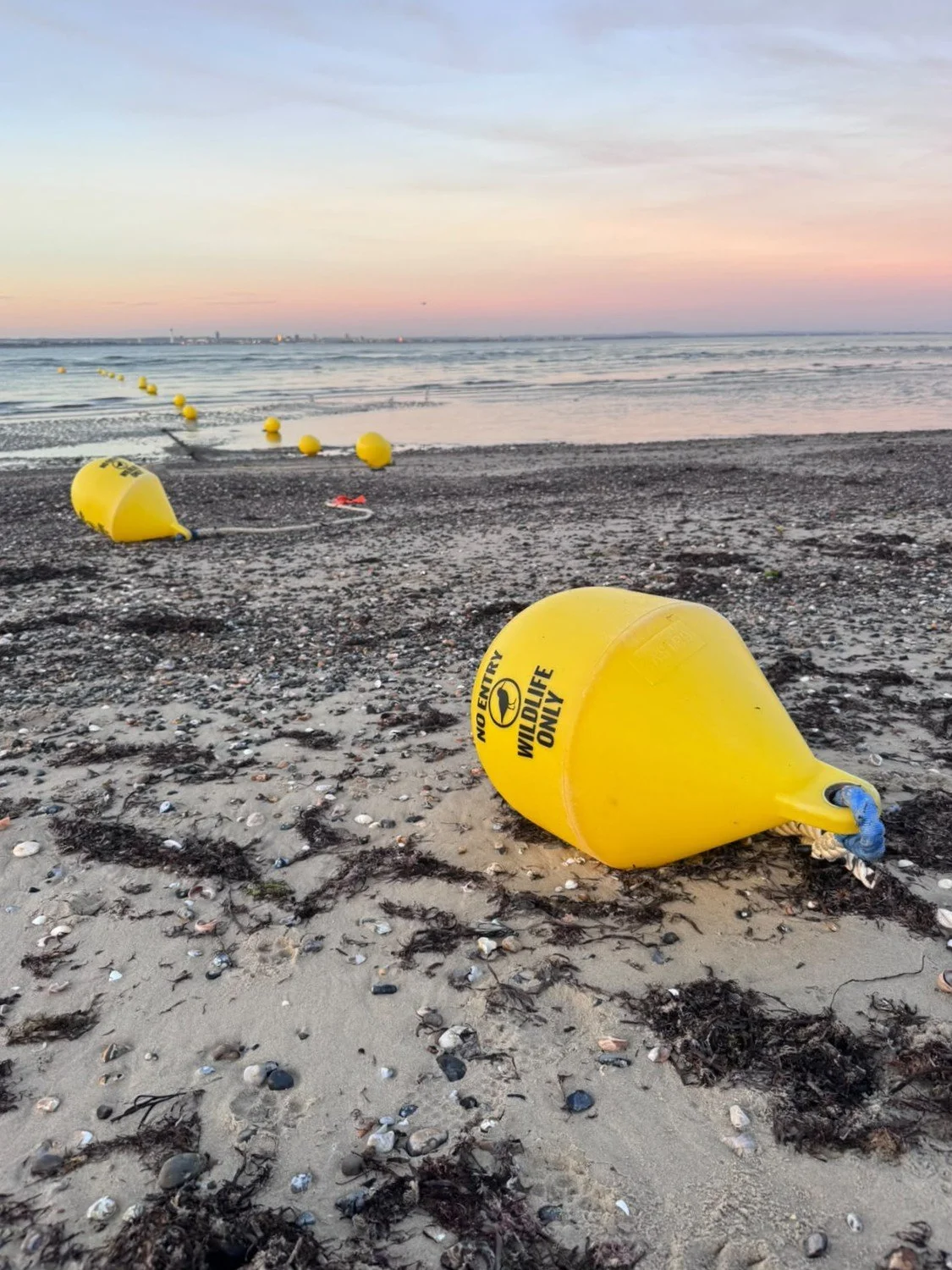
Volunteer recorders are back at their telescopes, while yellow marker buoys carrying “NO ENTRY WILDLIFE ONLY” signs mark the Bird Protection Area, with support from Ryde Marina. Storm gates and boards at Ryde and Hersey have also been closed to help reduce disturbance.
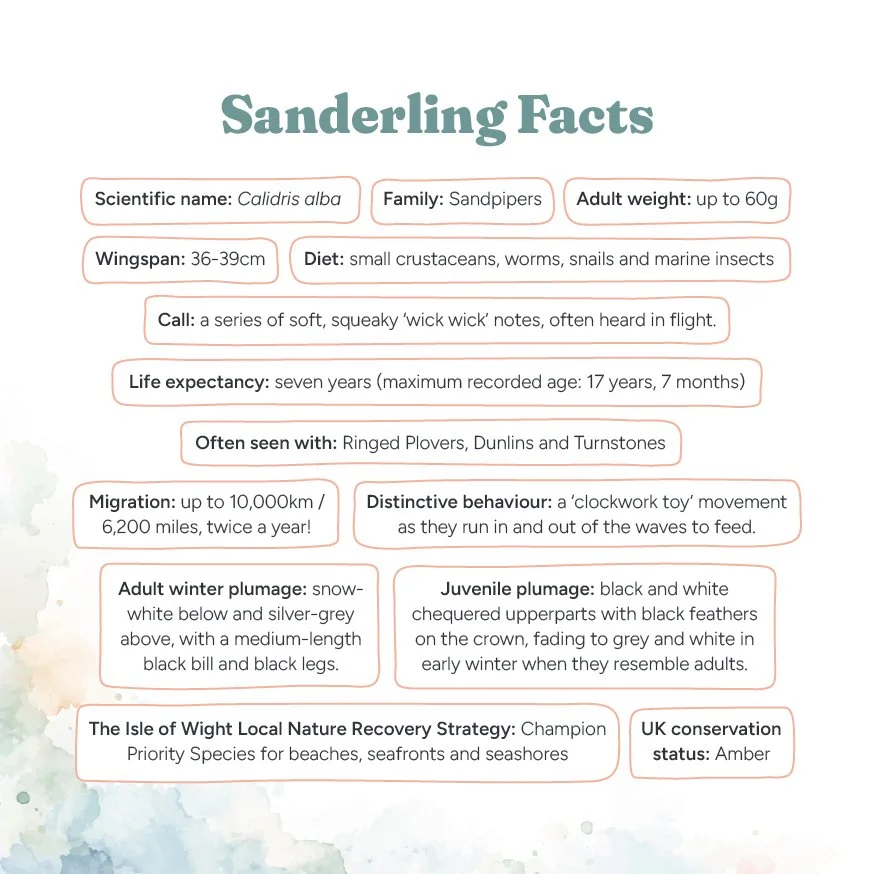
A shared awareness campaign and a new free illustrated Sanderling Stories booklet are helping people discover these birds, understand their journeys and learn how to give them space to feed and rest.
Alongside this engagement, beach profiling and work with transport providers are underway. Partners are exploring how birds use the coastline between Hersey and Seaview when disturbed from Ryde, and how to strengthen a network of places where they can rest undisturbed.
The project team reports a positive public response. Monitoring and community involvement will continue through the winter, building understanding of the birds and the shoreline we share with them.
Find out more through the Sanderling Recovery Project page on Island Nature.
Supporting the Island’s breeding Oystercatchers
The Medina and Newtown are important areas for the Island’s breeding Oystercatchers. Survey work is helping identify where birds nest and how practical measures could improve their breeding success.
On the Medina, Oystercatchers have been found nesting in unusual places, including boats. Artificial nesting platforms are being explored as an option, drawing on encouraging experience elsewhere in the Solent.
Monitoring and local knowledge will help identify suitable locations and assess whether these measures give more chicks the chance to fledge.
Further populations found of rediscovered wolf-spider
Following the rediscovery reported last year, further surveys have found White-knuckled Wolf-spiders at additional Island sites.
The White-knuckled Wolf-spider (Aulonia albimana) was found at Brickfields, Newtown, in October 2025 by Mark Telfer and Graeme Lyons. The discovery was made during surveys for the National Trust’s Isle of Wight Rare Invertebrates Species Recovery Programme, funded by Natural England.
The species had not been recorded in Britain since 1985, when it was last seen at Jersey Camp Firing Range.
Further surveys have since found additional populations at Ningwood Common and Jersey Camp. These discoveries suggest it may be more widespread on the Island than previously understood, although further monitoring is needed to establish its distribution and conservation status.
The findings highlight the value of specialist survey work in uncovering—and helping conserve—the Island’s rare wildlife.
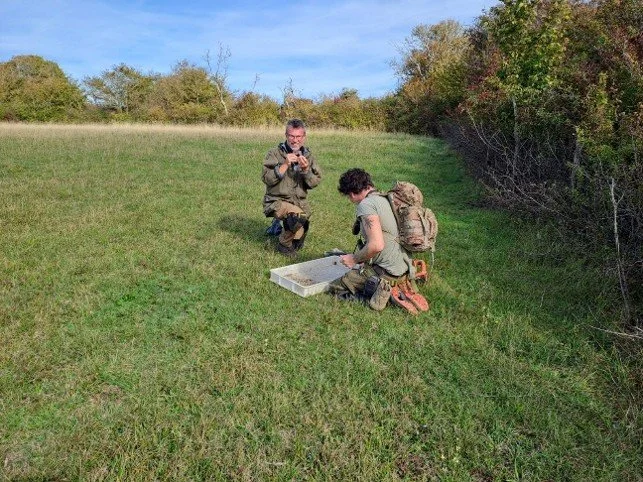
Mark Telfer and Graeme Lyons carrying out invertebrate surveys for the National Trust’s Isle of Wight Rare Invertebrates Species Recovery Programme. Their work has revealed further populations of the rare White-knuckled Wolf-spider. Photo: National Trust.
Growing plants for recovery
Around 200 propagated Black Poplars are ready for planting. Work is also underway through the Reddish Buff Species Recovery Project, alongside Saw-wort seed collection and propagation involving Ventnor Botanic Garden.
A long-awaited arrival
Swift boxes at Freshwater Fields are being used after more than ten years—a welcome reminder that conservation efforts can take time to bear fruit.